

Why take this course
In this comprehensive course, students will master the art of computational and parametric design through the detailed deconstruction and modeling of BIG's IQON building, located in Quito, Ecuador. Guided by Arie de Jongh from ThinkParametric, learners will dissect the building's intricate facade, exploring how computational methods streamline complex architectural modeling processes. By leveraging Rhino and Grasshopper, participants will transform analytical insights into dynamic, adaptable models, significantly boosting their proficiency in architectural technology.
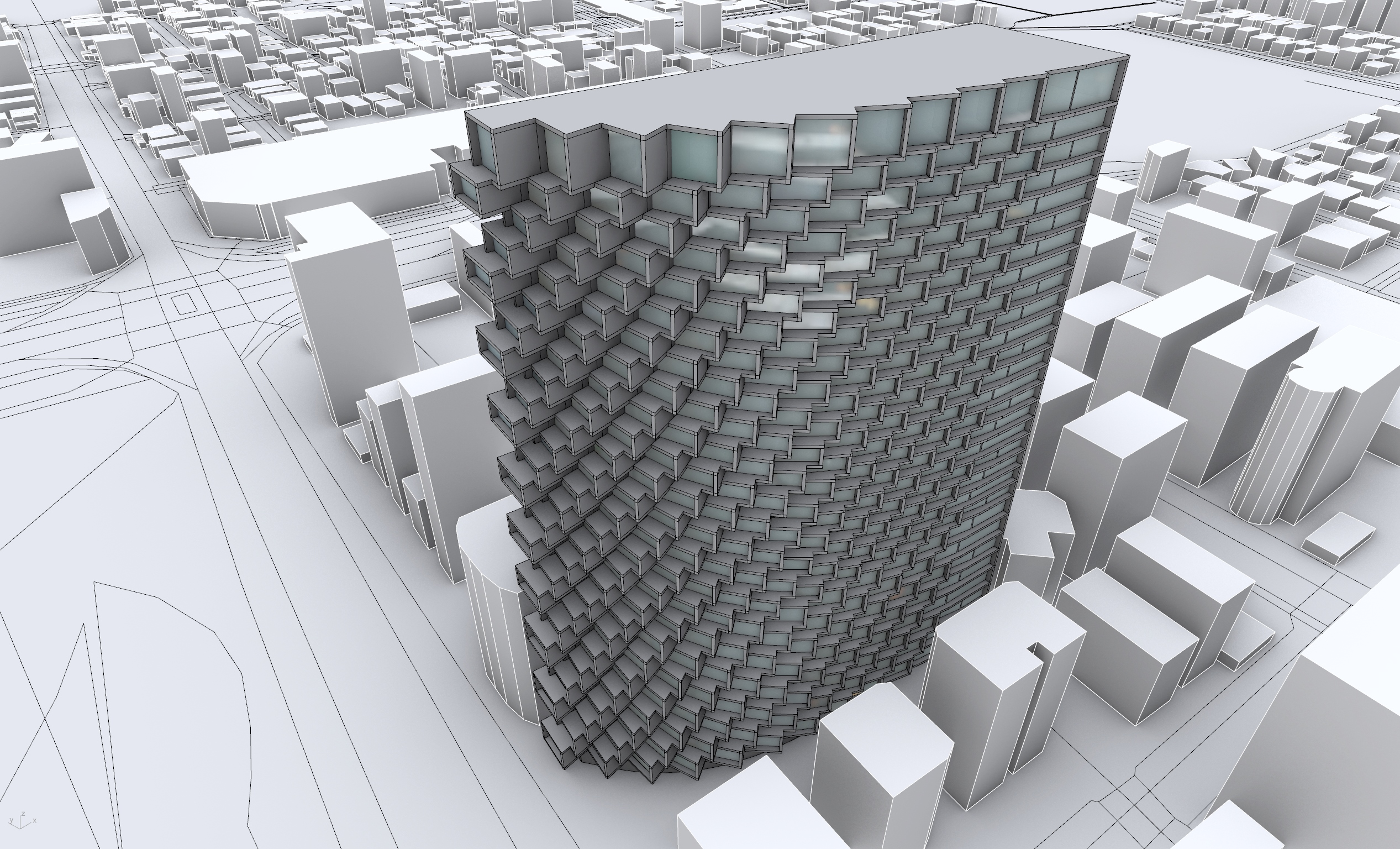
Throughout this course, students will cover critical topics such as analyzing architectural logic, creating foundational geometry, generating intricate facade details, and converting parametric curves into three-dimensional volumes. Each lesson builds methodically on the previous one, allowing for a clear and logical progression of skills and understanding. This structured approach ensures that whether students are beginners or seasoned designers, they can gain practical, immediately applicable knowledge to enhance their design capabilities.
Enroll now and become proficient in parametric modeling, allowing you to approach complex architectural projects with confidence and creativity.
Learn computational design by modeling BIG's IQON Building with Rhino and Grasshopper
Rhino and Grasshopper together offer unparalleled capabilities in computational design. By mastering these tools through the lens of BIG's innovative IQON building, students learn to approach architectural modeling systematically and creatively, significantly expanding their design potential and professional capabilities.
In-Depth Building Analysis
Students begin by deeply analyzing the IQON building's key architectural elements, including its jagged balconies, distinctive curved facades, and diagonal facade patterns. This critical first step equips learners with the ability to interpret architectural intent effectively, laying a strong foundation for accurate and meaningful parametric modeling.
Precision in Foundational Geometry
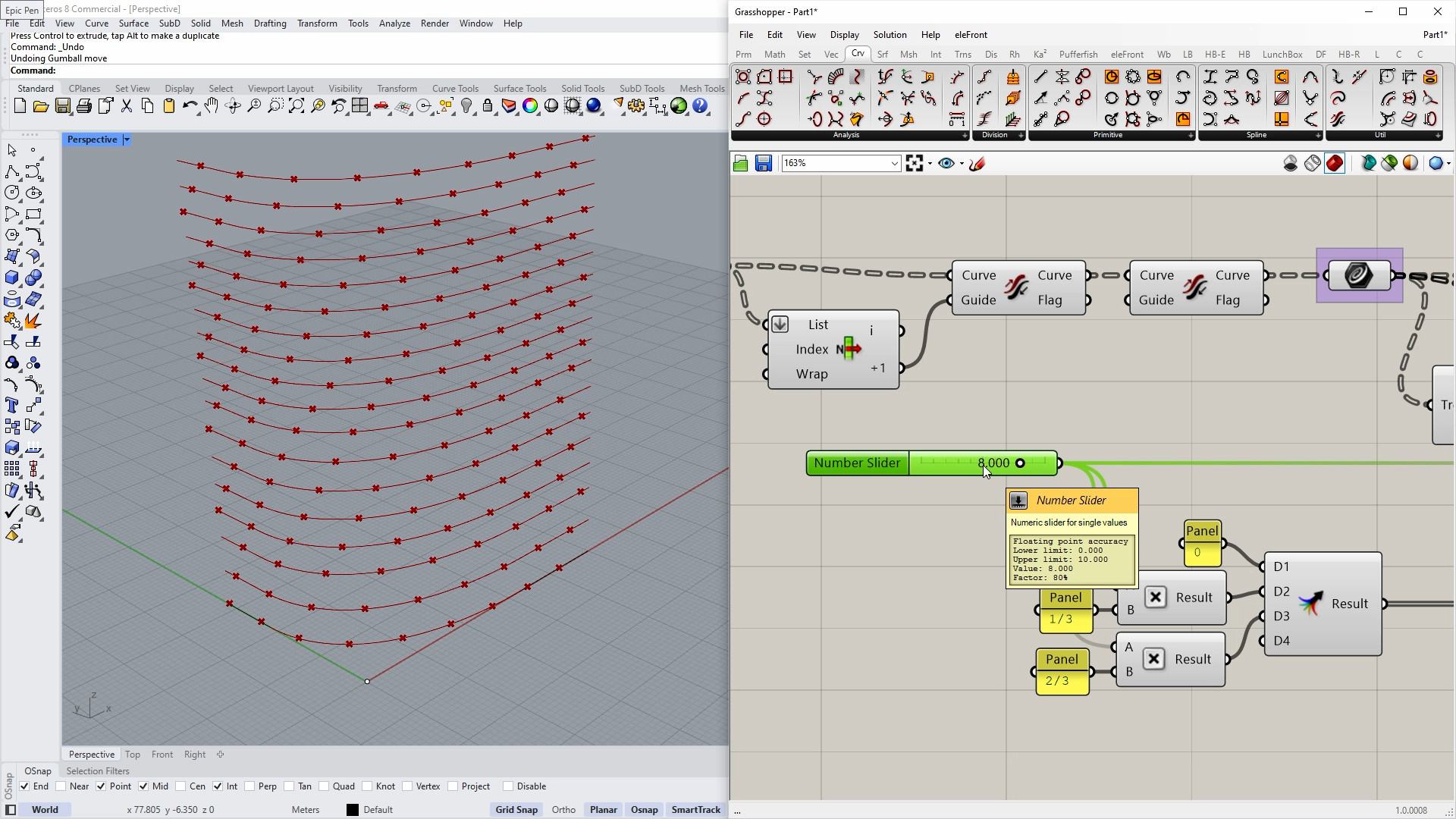
By creating the initial facade outlines in Rhino, learners grasp essential techniques for setting accurate base geometries. These foundational curves become pivotal references, allowing the parametric process to remain precise and adaptable, and providing the groundwork for generating complex architectural details efficiently.
Dynamic Staggered Patterns
Participants will explore advanced techniques for dividing facade surfaces into staggered bays, replicating the IQON building's unique diagonal facade patterns. Through these methods, learners acquire skills that are broadly applicable to other architectural projects, enhancing their flexibility and responsiveness in design iterations.
Complex Jagged Facade Details
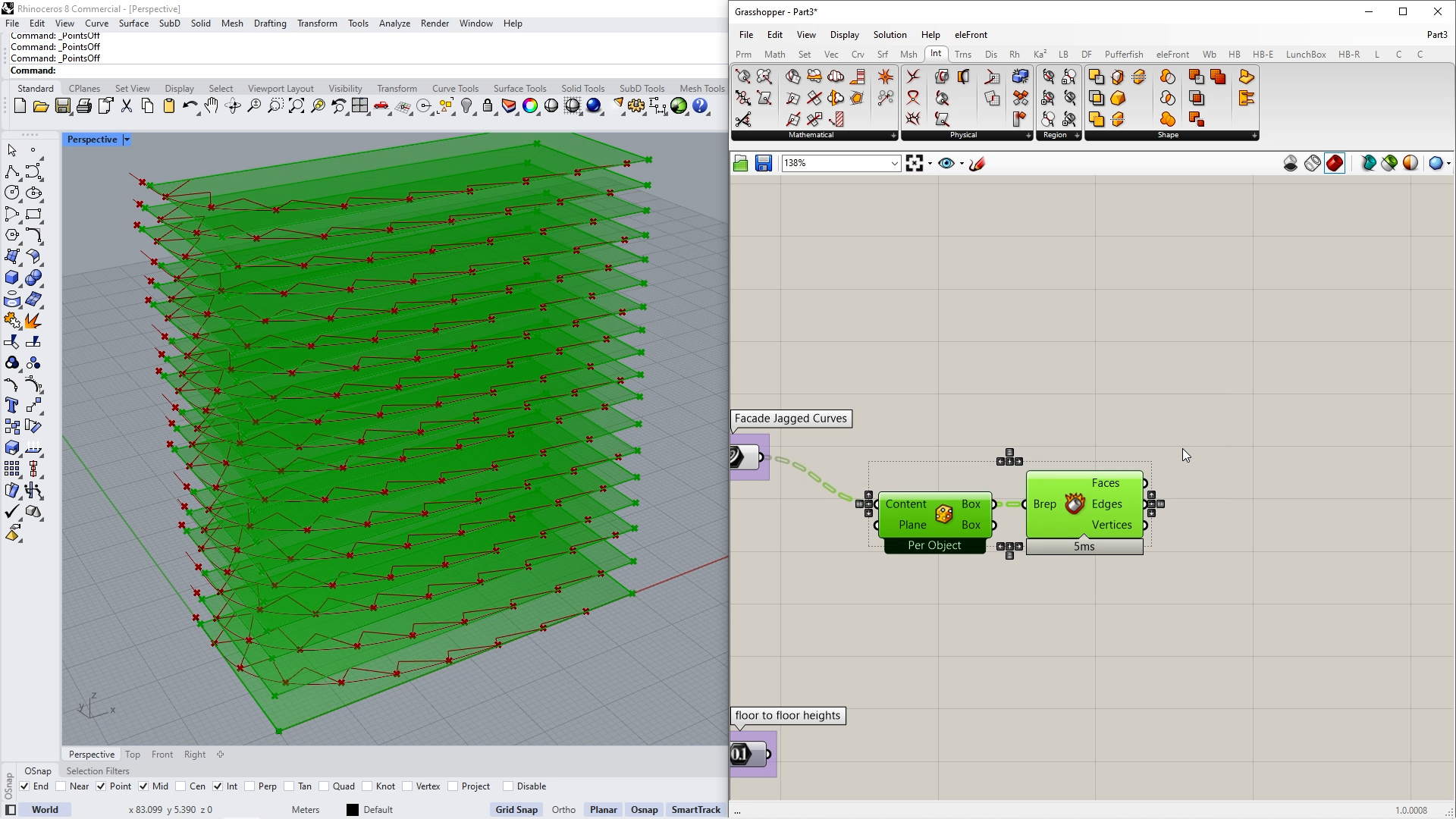
The course delves into generating the distinctive jagged outlines that characterize the building's facade. By mastering these parametric techniques, students will be able to dynamically control intricate details, ensuring their designs remain adaptable and aligned with original architectural concepts, regardless of future design changes.
Comprehensive 3D Volume Modeling
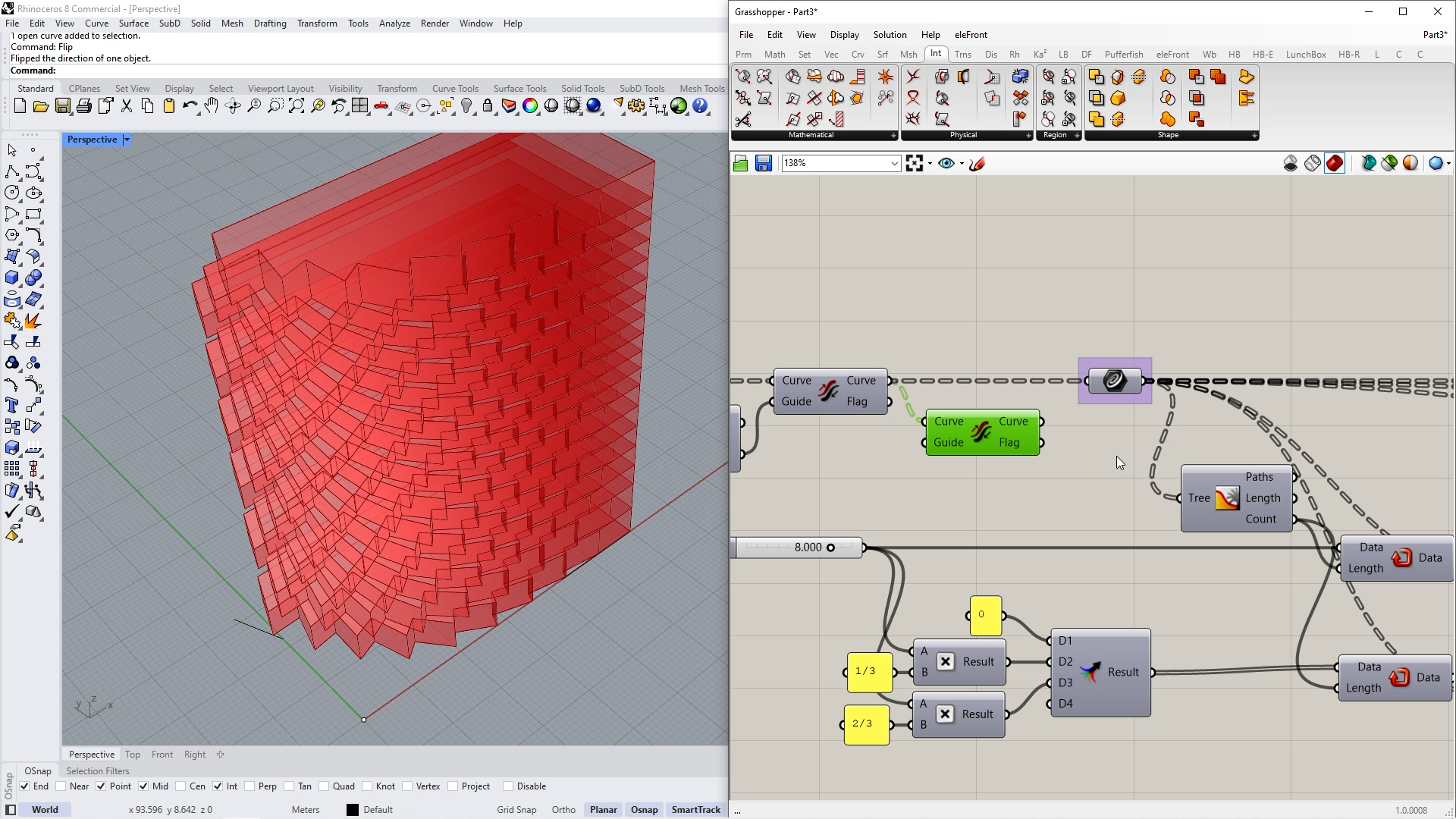
Finally, students transform their detailed parametric curves into complete three-dimensional volumes, including the incorporation of balconies and facade complexities. This step consolidates all previously learned skills, providing students with a thorough understanding of turning theoretical concepts into tangible, visually impactful architectural models ready for detailed design and visualization.
1.- Analyzing the Facade
03min 07seg2.- Generating the overall floor outlines
10min 18seg3.- Defining the apartment bay sizes
10min 10seg4.- Creating the jagged facade outlines
10min 22seg5.- Turning the outlines into a 3D massing
13min 30seg